Exhibition dreams
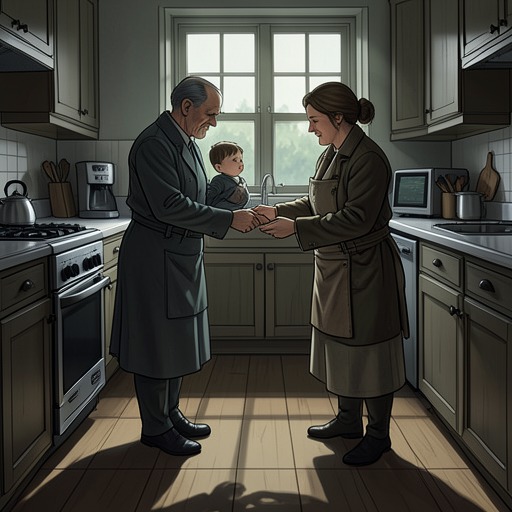
The Interpretation of DreamsExhibition dreams, also called nakedness or embarrassment dreams, are defined not simply by appearing undressed but by a particular conflict: the dreamer feels exposed and ashamed before strangers, wants to hide or flee, and finds movement impossible. Freud treats that combination as a recurring pattern rooted in early childhood, where exhibitionist pleasure had not yet become shame. The dream’s mixture of exposure, indifference, and inhibition gives form to both the wish to repeat that earlier experience and the censorship that opposes it.
The recurring dream pattern
The dream’s clothing is usually indistinct. A dreamer may report being in a shirt, or in a shirt or underwear, without a clear image of what is missing. The exposure may instead appear as a failure of proper dress: an officer is on the street without a sabre, another person lacks a necktie, or someone wears checked civilian trousers. In each variation, the clothing is inadequate enough to produce embarrassment, but not necessarily so inadequate that the shame seems warranted by the scene itself.
The onlookers are generally strangers whose faces remain unclear. They do not point, object, or laugh; they are indifferent, and in one particularly clear example, stiff and solemn. This composure makes the dream internally discordant: the dreamer’s shame seems to call for astonishment or ridicule from the spectators, yet those reactions are absent. For Freud, that absence is not incidental. Wish-fulfilment has removed the offensive response, leaving the dreamer’s shame and the onlookers’ indifference out of harmony.
Childhood material and wish-fulfilment
Freud traces the dream’s underlying material to early childhood, when children might be seen undressed by relatives, visitors, nursemaids, or servant-girls without feeling shame. He describes children who laugh, jump about, and try to show themselves off, while a mother or caregiver reprimands them. One patient retained a conscious memory from his eighth year: after undressing for bed, he tried to dance out in his shirt before his younger sister, but the maidservant looking after him stopped him. Freud also notes that children sometimes lift their shirts before passers-by, treating the display as a greeting or performance.
In this interpretation, the adult dream does not reproduce childhood as a straightforward memory. Its central figure is the dreamer as an adult, while the clothing remains blurred beneath later recollections and the demands of censorship. The actual childhood spectators do not, Freud says, usually reappear. Instead, an indefinite crowd of strangers takes their place. Their indifference is the wishful opposite of the response Freud associates with the familiar person before whom the child once exposed himself. Nakedness dreams thus become exhibition dreams: the earlier wish to display oneself returns in disguised form.
Freud extends this account through the image of Paradise as a collective fantasy of an individual childhood without shame. In his formulation, people are naked in Paradise and feel no embarrassment until shame and anxiety awaken, along with sexual life and cultural restraints. Dreams can, he proposes, return the dreamer to that imagined earlier state. Repetition of early impressions may itself fulfil a wish, even where the content has been transformed by later experience.
Shame, inhibition, and censorship
The shame in the dream is not merely a reaction to exposure. Freud reads it as the second psychical system’s response to the return of a scene it had repudiated: the exhibition scene has found its way into representation despite repression. The embarrassment therefore marks a conflict between the wish that sustains the scene and the censorship that resists it.
The dream’s characteristic inability to move gives that conflict a further form. The unconscious intention is to continue the exhibition, while censorship demands that it stop. Inhibition represents the opposing force—the dream’s “No”—without simply cancelling the scene. The dream can preserve the exposure and the wish behind it while making escape or concealment impossible. Its form holds the opposing impulses together rather than resolving them.
Stories and the reinterpretation of dreams
Freud compares the dream’s indifferent spectators with the familiar story of the Emperor’s invisible clothes. In Hans Andersen’s tale, the Emperor appears naked, but everyone pretends not to notice because the garment is said to be visible only to the virtuous and loyal. Freud argues that the tale offers a later, conscious reinterpretation of the dream situation: the dream’s meaning was not understood, so a story supplied a coherent guise and put the scene to other purposes. In his reading, the dreamer occupies the Emperor’s place, the dream plays the deceiver, and the tale’s moralizing tendency hints at forbidden wishes that have been sacrificed to repression.
The article also links the dream pattern to poetry. A passage in G. Keller’s Green Henry describes Odysseus approaching his homeland in a dream, only to discover that he is in rags, naked, and covered in dust before waking in shame and fear. Freud presents this as a poet’s recognition of a recurring dream of the sorrowful and displaced. In this account, poetic material can preserve or retrace a dream structure, rather than standing apart from the psychological processes that shape it.
Interpretive limits and gendered readings
The account of exhibition dreams belongs to a larger interpretive method that treats dreams as material to be deciphered. The book’s criticism of that method emphasizes Freud’s reliance on word-play and his tendency to distrust manifest dream content in favour of latent meaning. It also points out that, although later editions added fixed sexual meanings for symbols such as staircases, tables, and lost teeth, the first edition stopped short of that mechanical scheme. The distinction matters: exhibition dreams are interpreted through a proposed pattern of childhood memory and censorship, not through a universal dictionary of sexual symbols.
The book nevertheless identifies a gender bias in Freud’s readings of individual women patients. A woman’s dream of going to market and encountering strange vegetables is interpreted through sexual and racial word-play; another woman’s dream about Italy is read through a pun on “gen Italien.” The contrast is sharp when set beside Freud’s own dream of riding a horse through a narrow passage between two carts, in which he fails to recognize a sexual meaning. A footnote further records a patient’s fantasy of sexually provocative behaviour on Freud’s part, which she rejects; another describes a patient’s dream as concealing such a fantasy. These examples do not establish the meaning of exhibition dreams themselves, but they complicate the authority with which Freud assigns sexual meanings to women’s dream material. The dream type’s theoretical force rests on the opposition between childhood display and adult shame; its interpretation also exposes the risks of allowing the analyst’s preferred associations to overrule the dreamer’s own experience.